Wat Chaiwatthanaram: Ayutthaya's Riverside Royal Temple
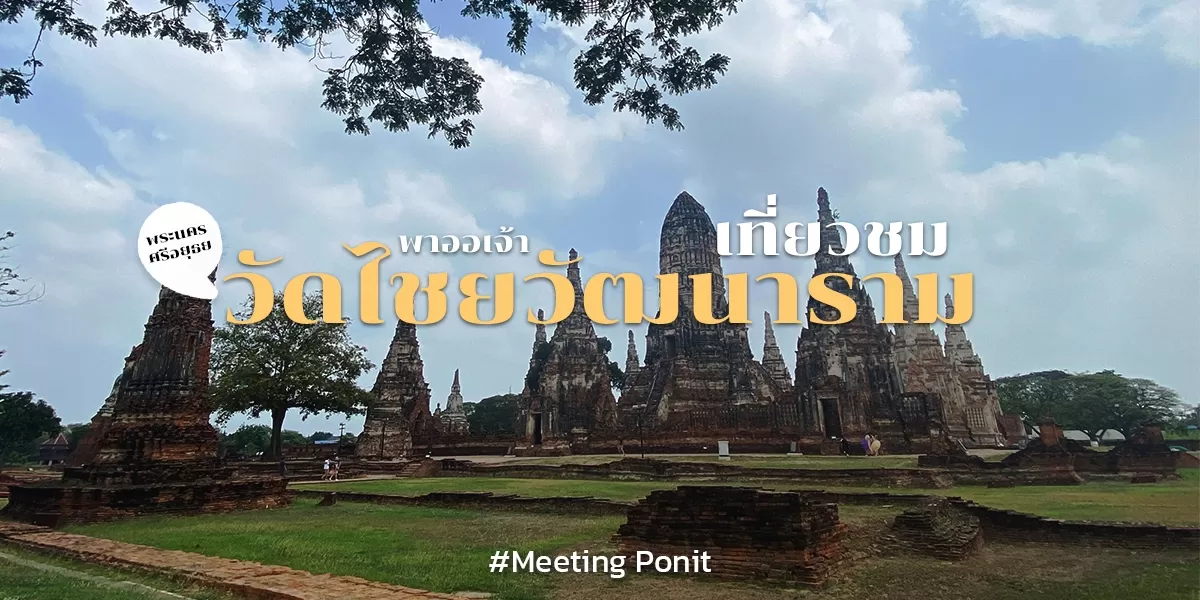
Wat Chaiwatthanaram is a late-Ayutthaya royal temple on the west bank of the Chao Phraya River, outside the old city island, famous for its central prang believed to be modeled on Angkor Wat.
 Meeting Point Management Team
Published · Updated
3 min read
1,488 views
Quick answer
Wat Chaiwatthanaram is in Ban Pom, Phra Nakhon Si Ayutthaya, on the Chao Phraya River. It was built in 1630 by King Prasat Thong and is known for its central Phra Prang Si Rattana Mahathat and its cloister. It opens 08:00-16:30, and entry is 10 baht for Thais and 50 baht for foreigners.
Key takeaways
- Built in 1630 by King Prasat Thong on the site of his former home
- Believed to be modeled on Angkor Wat to commemorate a victory over Longvek
- Must-sees: the central prang, the cloister and the ordination hall
- Entry: 10 baht Thais, 50 baht foreigners; combined ticket 40 / 220 baht valid for 30 days
- Evening light-up of the ruins from about 19:30-21:00
Contents
Come along, dear ("ao jao", as they said in old Ayutthaya)! Today Meeting Point is taking you to Wat Chaiwatthanaram, which is every bit as beautiful as people say. You really have to see it for yourself. It's easy on the eyes, calming for the soul, a chance to make merit and a great way to soak up the history of Ayutthaya. If you don't know where to go on your day off, we highly recommend it.

Wat Chaiwatthanaram is a royal temple of Ayutthaya dating from the late Ayutthaya period. It's located in Ban Pom, Mueang District, Phra Nakhon Si Ayutthaya, on the bank of the Chao Phraya River on the western side, outside the city island.
History of Wat Chaiwatthanaram
Wat Chaiwatthanaram was built in 1630 (B.E. 2173) by King Prasat Thong. He ordered it built on the site of his former home, dedicating the merit to his mother. Prince Damrong Rajanubhab believed the temple was built as a memorial to the victory over Longvek (Lawaek), modeled on Angkor Wat.
Wat Chaiwatthanaram was a royal temple where kings made merit, and it was restored in every reign that followed. It was also the cremation site for almost all members of the royal family; when King Borommakot passed away, his cremation was held here too.

Places in the temple you shouldn't miss
Once you're here, don't miss these spots.
The cloister (rabiang khot)
The cloister links the meru towers together around the circumambulation platform, and originally it had a roof all around. In this cloister there were Buddha images in the Subduing Mara posture, 120 in total. Today only 2 still have their heads.

Phra Prang Si Rattana Mahathat
As soon as you arrive at Wat Chaiwatthanaram, you'll see Phra Prang Si Rattana Mahathat, the main prang in the middle of the temple. It's a fascinating and beautiful ancient monument. The top of the prang is made of 7 stacked bands, each decorated with jackfruit-leaf and petal patterns, topped with a lotus-bud shape. This style of prang resembles those of the early Ayutthaya period, which suggests that the prang style popular in early Ayutthaya was revived and rebuilt here.
The ordination hall
The ordination hall of Wat Chaiwatthanaram stands in front of the wall of the meru towers, outside the cloister. Today only its base remains. Beside it is a chedi with twelve indented corners, and these important monuments are surrounded by three layers of walls. There are also a number of smaller prangs and chedis that were added later.
Inside the meru towers of the cloister at Wat Chaiwatthanaram are stucco Buddha images that resemble the large crowned Buddha at Wat Na Phra Meru. They are believed to have been extensively restored in the reign of King Prasat Thong as well.

Entrance fees
Thais 10 baht, foreigners 50 baht.
Or you can buy a combined ticket: 40 baht for Thais and 220 baht for foreigners. This ticket lets you visit temples and ancient sites in the historical park within 30 days, including Wat Phra Si Sanphet and the Royal Palace, Wat Mahathat, Wat Ratchaburana, Wat Phra Ram and Wat Chaiwatthanaram.
Note: From about 19:30 to 21:00, the ruins in Phra Nakhon Si Ayutthaya Historical Park are lit up for night viewing. Audio guides are available with commentary on Wat Phra Si Sanphet, Wat Chaiwatthanaram and Wat Mahathat in Thai and English. You can rent them at the service point near the ticket booth of the historical park for 150 baht per device, covering those 3 temples (entry tickets not included).
Wat Chaiwatthanaram, Ayutthaya
- Address: Ban Pom, Phra Nakhon Si Ayutthaya District, Phra Nakhon Si Ayutthaya Province
- Map: https://goo.gl/maps/tLNZFCphqt1BS4Au6
- Open: 08:00-16:30
- Phone: Phra Nakhon Si Ayutthaya Historical Park 035 242 286
- Facebook: https://bit.ly/3MlkoYw
FAQ
Where is Wat Chaiwatthanaram?
It is in Ban Pom, Phra Nakhon Si Ayutthaya District, on the west bank of the Chao Phraya River just outside Ayutthaya's old city island.
How much is the entrance fee?
10 baht for Thais and 50 baht for foreigners. A combined ticket (40 baht Thais, 220 baht foreigners) covers several temples in the historical park for 30 days.
What are the opening hours?
It opens 08:00-16:30. The ruins in the historical park are also lit up from about 19:30 to 21:00.
Is there an audio guide?
Yes. Audio guides in Thai and English covering Wat Phra Si Sanphet, Wat Chaiwatthanaram and Wat Mahathat can be rented near the ticket booth for 150 baht, not including entry tickets.
The Meeting Point management team loves eating, travelling, temple visits and lifestyle. We pick the restaurants, cafes, stays, attractions and temples we have visited ourselves and write about them honestly.