Wat Pho: Making Wishes at Bangkok's Temple of the Reclining Buddha
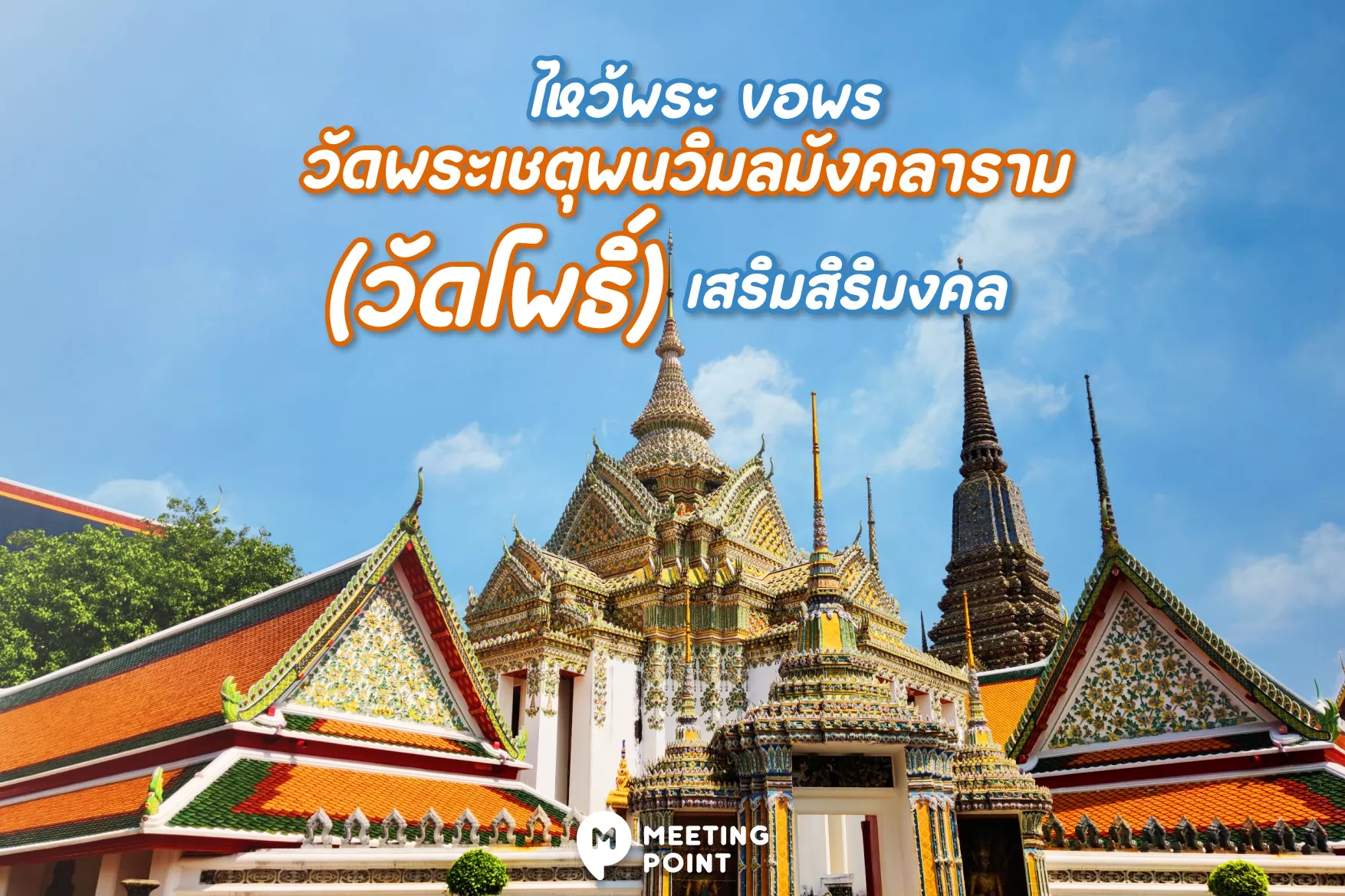
Wat Pho, or Wat Phra Chetuphon, is a famous temple on Rattanakosin Island. Come pay respects to the Reclining Buddha, make a wish for luck or love, and learn its history.
 Meeting Point Management Team
Published · Updated
3 min read
1,553 views
Quick answer
Wat Pho (Wat Phra Chetuphon Wimon Mangkhalaram) is on Sanam Chai Road, Phra Nakhon, Bangkok, just south of the Grand Palace. It's a first-class royal temple, the temple of King Rama I, covering 51 rai. Many believe that praying at the Reclining Buddha's feet brings luck and love. Open daily 8am to 6:30pm, a short walk from MRT Sanam Chai.
Key takeaways
- A first-class royal temple and the temple of King Rama I, covering 51 rai
- Re-established by King Rama I in 1788, with 1,248 Buddha images brought in
- Major renovation under King Rama III took 16 years and 7 months, adding Chinese tiles
- Listed on UNESCO's Memory of the World Asia-Pacific Regional Register in 2008
- Open daily 8am to 6:30pm, near MRT Sanam Chai
Contents
Making wishes at Wat Phra Chetuphon (Wat Pho) for good fortune
For spiritual types like us, a temple visit to make merit is always a good idea. Today Meeting Point is taking you to pay respects and make wishes at Wat Phra Chetuphon Wimon Mangkhalaram, better known as Wat Pho, for good fortune. It's a famous temple on Rattanakosin Island that's really worth seeing with your own eyes. Let's go.

Let's start with the name: Wat Phra Chetuphon Wimon Mangkhalaram Ratchaworamahawihan. According to the Royal Institute dictionary, it's pronounced "wat phra chet-tu-phon wi-mon mang-kha-la-ram" or "wat phra chet-tu-phon wi-mon mang-khla-ram". It's commonly called Wat Photharam, or simply Wat Pho. It's believed that Wat Pho was originally a small community temple built in the Ayutthaya period, restored by King Taksin of Thonburi, and then re-established on the east bank of the Chao Phraya River by King Phutthayotfa Chulalok (Rama I) in 1788 (B.E. 2331).

Wat Pho is close to Wat Phra Kaew, just south of the Grand Palace, beside the Chao Phraya River. It is a first-class royal temple and the temple of King Rama I of the Chakri dynasty. The grounds cover 51 rai. It was designed and built by master craftsmen skilled in classical architecture going back to the Ayutthaya period, and it blends Thai, Western and Chinese art in a harmonious and distinctive way.

When Wat Pho was first restored, King Rama I brought Buddha images from the old capital and from northern towns, including large and important images with unique features from many periods: Lopburi, Lanna, Sukhothai, early Ayutthaya, middle to late Ayutthaya and Rattanakosin. In total, 1,248 images were enshrined in the halls. The restoration took 7 years, 5 months and 28 days. King Rama I then gave the temple a new name, "Wat Phra Chetuphon Wimon Mangkhalawat", meaning "the beautiful dwelling of the Buddha". Several reigns later, King Mongkut (Rama IV) changed the name to "Wat Phra Chetuphon Wimon Mangkhalaram".

Later, under King Nangklao (Rama III), the country's economy flourished thanks to Siam's junk trade with foreign countries, which brought in huge profits. Seeing that Wat Pho had fallen into serious disrepair, King Rama III ordered the ordination hall to be taken down and the temple rebuilt, bigger and more beautiful than before, in honor of King Rama I. This renovation took 16 years and 7 months. Chinese glazed tiles were used to decorate the twelve-cornered chedis, and Chinese-style rock gardens (khao mo) were added to the Thai architecture. In 2008 (B.E. 2551), Wat Pho was inscribed on UNESCO's Memory of the World Regional Register for Asia and the Pacific. Truly impressive.

There's also a belief that if you pay respects at the feet of Wat Pho's Reclining Buddha and make a wish, your life will run smoothly and happily, with good luck. The Reclining Buddha is also said to help with love, especially for single women in their thirties who haven't found a partner yet. If that's you, it can't hurt to try.
How to pray to the Reclining Buddha (Phra Phuttha Saiyat)
- Pay respects to the Reclining Buddha and state your name: "I, (first name and surname)..."
- Offer three bundles of rice noodles (khanom jeen). After praying, wait until the incense has burned out, then take your leave and eat the noodles. The noodle strands symbolize the threads of love that will lead you to your soulmate.
- Important: pray on a Tuesday, because Tuesday is associated with the number 3. To ease bad karma, pray near the ears. To make a wish, pray at the feet. Don't pray at the wrong spot!
Offerings for the Reclining Buddha
- 3 bundles of rice noodles with fish curry sauce (khanom jeen nam ya)
- 8 pink incense sticks
- 8 pink candles
- 8 baht
- 8 lotus flowers
- 1 bottle of drinking water
Getting there: take the MRT to Sanam Chai station; it's a short walk.

Wat Pho information
Address: 2 Sanam Chai Road, Phra Borom Maha Ratchawang, Phra Nakhon, Bangkok 10200
Map: https://maps.app.goo.gl/Lo4XwVr9S4a9tRuW7
Open daily: 8:00am to 6:30pm
FAQ
What are Wat Pho's opening hours?
Open daily from 8am to 6:30pm.
How do I get to Wat Pho?
Take the MRT to Sanam Chai station; it's a short walk. The address is 2 Sanam Chai Road, Phra Nakhon, Bangkok.
Where do you pray at the Reclining Buddha?
By tradition, pray at the feet to make a wish and near the ears to ease bad karma. Tuesday is considered the best day.
What offerings are used to pray for love?
Three bundles of rice noodles with fish curry, 8 pink incense sticks, 8 pink candles, 8 baht, 8 lotus flowers and a bottle of water.
How old is Wat Pho?
It's believed to have started as a small Ayutthaya-era temple. King Rama I re-established it in 1788.
The Meeting Point management team loves eating, travelling, temple visits and lifestyle. We pick the restaurants, cafes, stays, attractions and temples we have visited ourselves and write about them honestly.