Sangkhlaburi – The Charm of Thailand's Misty Rain Town
Sangkhlaburi in Kanchanaburi is the town of three mists and three cultures – Mon, Karen and Thai. Here's our guide to the Mon Bridge, the sunken temple and more.
 Meeting Point Management Team
Published · Updated
4 min read
1,628 views
Quick answer
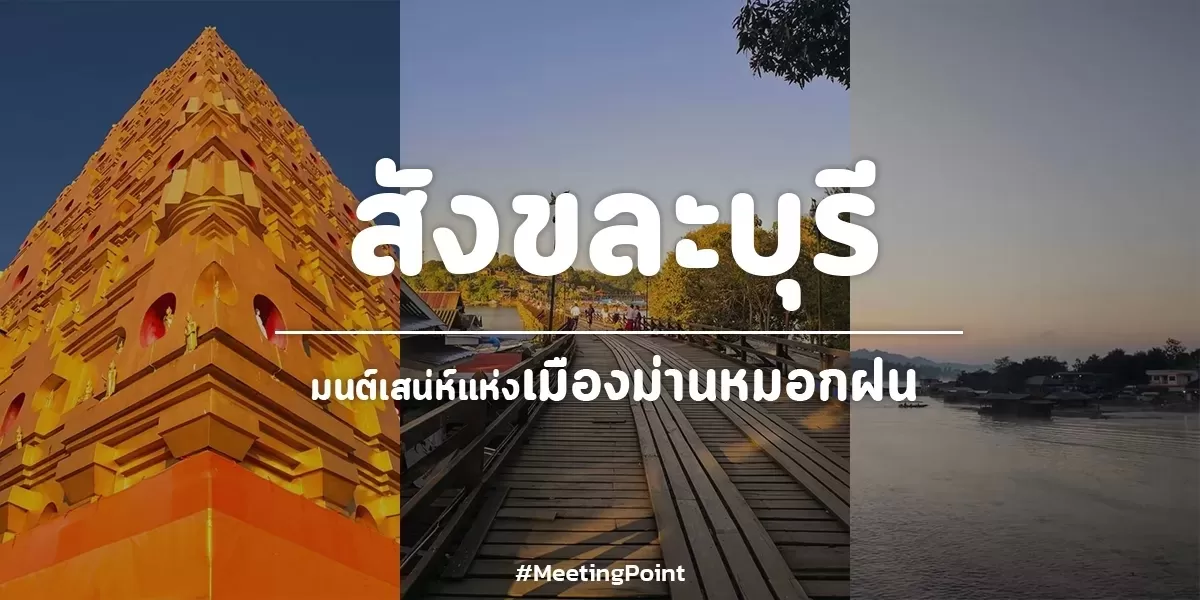
Sangkhlaburi is a border district of Kanchanaburi next to Myanmar, famous for mist, nature and its Mon, Karen and Thai cultures. Highlights include the Mon Bridge – Thailand's longest wooden bridge – the sunken temple, Luang Pho Uttama's temple, the Bodh Gaya Pagoda and Three Pagodas Pass. Minivans from Kanchanaburi town take about 3–4 hours.
Key takeaways
- Mon Bridge is Thailand's longest wooden bridge – come early for mist over the river
- The sunken temple can be walked into between March and May when water is low
- Luang Pho Uttama's temple and the Bodh Gaya Pagoda sit where three rivers meet
- Three Pagodas Pass is 20-plus km away, with a crossing to Payathonzu, Myanmar
- Minivan from Kanchanaburi town: 175 baht, about 3–4 hours
Contents
Sangkhlaburi is one of those towns that almost everyone wants to come back to once they've been. The local way of life, the wide variety of delicious and unusual food, the mix of cultures, the beautiful places and the enchanting atmosphere – anyone who visits ends up saying they've "fallen for Sangkhlaburi".
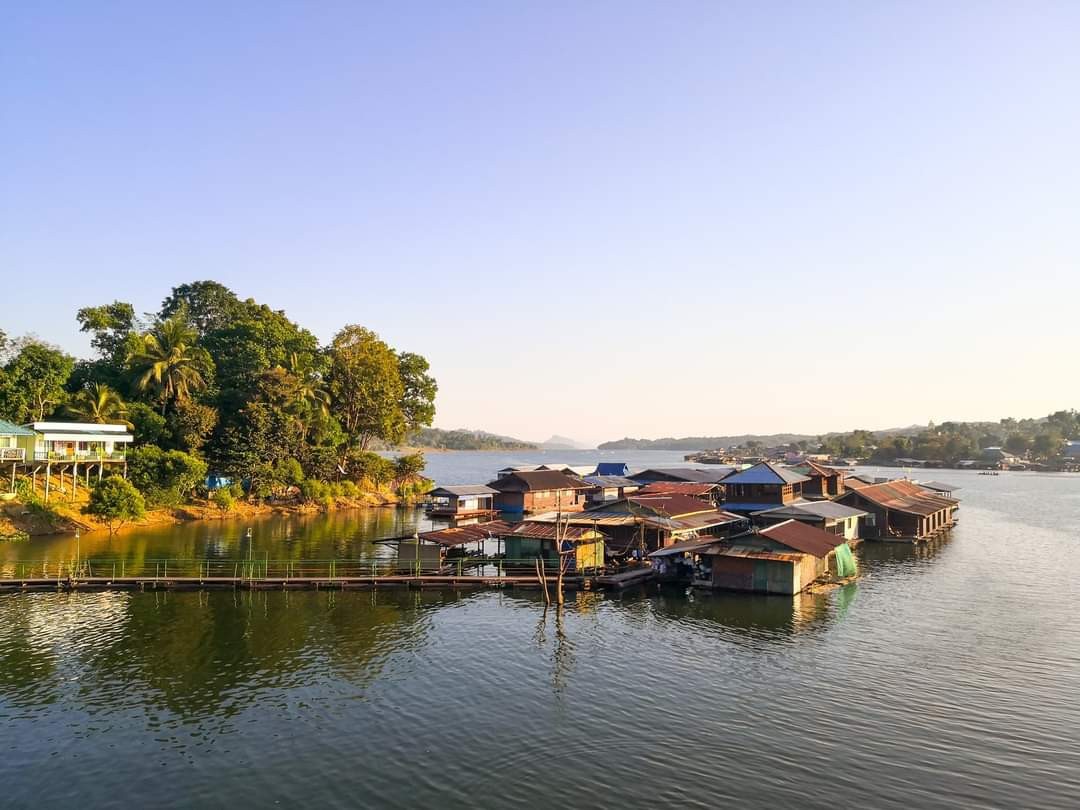
Sangkhlaburi is known as the town of three mists and the land of three cultures – a place of rivers, mountains and lush forest, with a rich mix of ethnic groups and cultures including Mon, Karen, Thai, Lao and Burmese. Its old names were "Sangkhlia" in Burmese and "Sangkhla" in the original local language, referring to the blending of the different peoples living in the district. Historically, Sangkhlaburi was a frontier town bordering Myanmar.
When Ayutthaya was the capital, Burmese armies often marched in to attack Siam, usually via the Three Pagodas route, so the area is full of history. In 1895 it became a district named "Wang Ka" district; the name was later dropped, in 1939 it became Sangkhlaburi minor district, and on 24 July 1965 it was upgraded to Sangkhlaburi district.
We've been to Sangkhlaburi many times, and we're happy every single time. You might get a bit carsick on the way, because the road before town winds a lot up into the hills. We took a minivan from Kanchanaburi town for 175 baht, which takes about 3–4 hours. These days it's mostly minivans – the old orange "rot wan yen" buses have almost disappeared, with only 1–2 trips a day left. You can also drive, but take care on the road. The scenery along the way is gorgeous, with plenty of places to stop before you reach Sangkhla – but our destination is, of course, the misty rain town of Sangkhlaburi itself.
Today we'll help you get to know Sangkhlaburi better through these places.
Mon Bridge
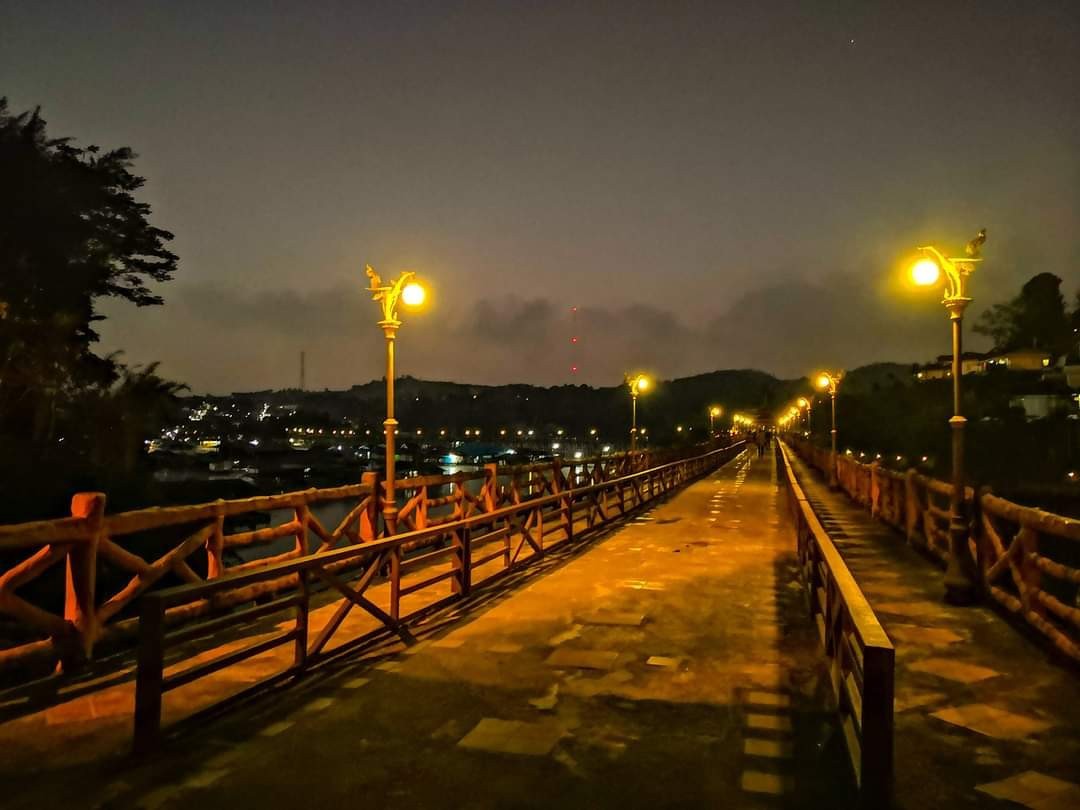
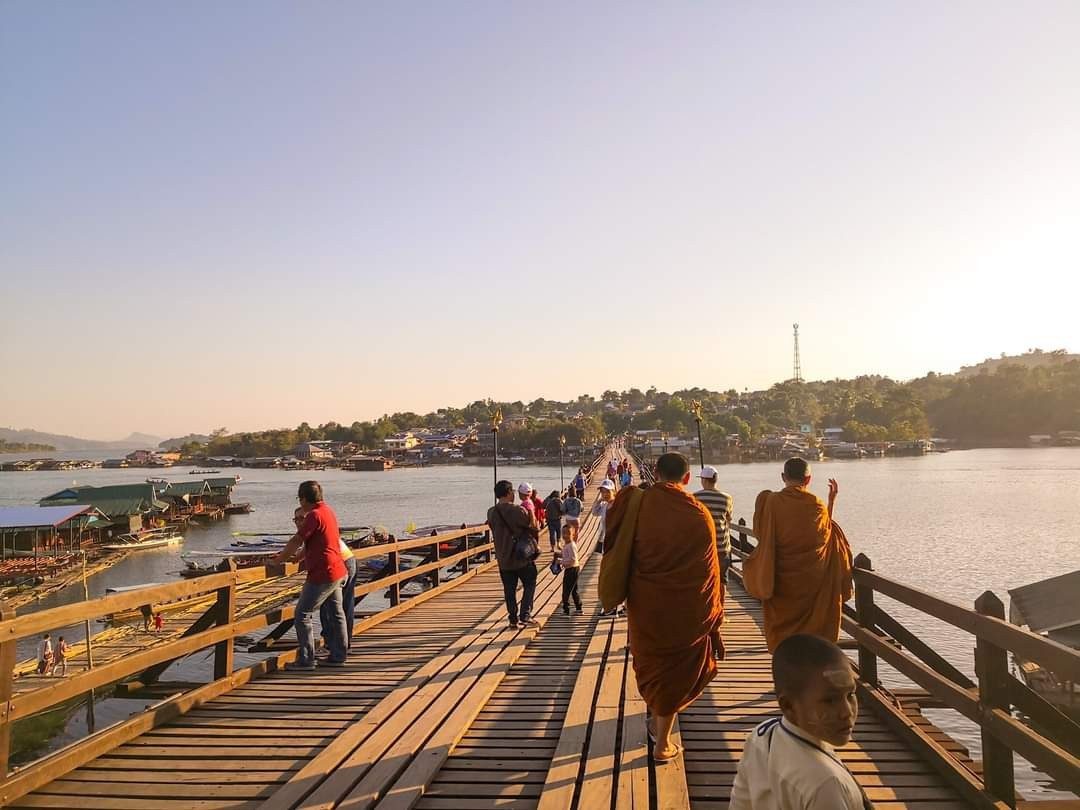
The Mon Bridge, or Uttamanusorn Bridge, is pretty much the landmark of Sangkhlaburi. It's a wooden bridge across the Songkalia River to the Mon village, and it's also considered the longest wooden bridge in Thailand. Lots of people dress up in traditional Mon outfits to take photos here, so it's always lively. In the morning people come to give alms to monks – and if you come early and catch the mist rising over the river, it's pure magic.
The sunken temple (Wat Wang Wiwekaram)
The old Wat Wang Wiwekaram, also called the underwater or sunken temple, is another place you shouldn't miss. When the Khao Laem Dam (Vajiralongkorn Dam) was built, the temple was flooded, so it was moved up the hill as the new Wat Wang Wiwekaram while the old temple stayed under water. The sunken temple is a real highlight – between March and May, when the water level drops, visitors can even walk inside. Taking a boat out to see it is very popular.
Luang Pho Uttama's temple (Wat Wang Wiwekaram)
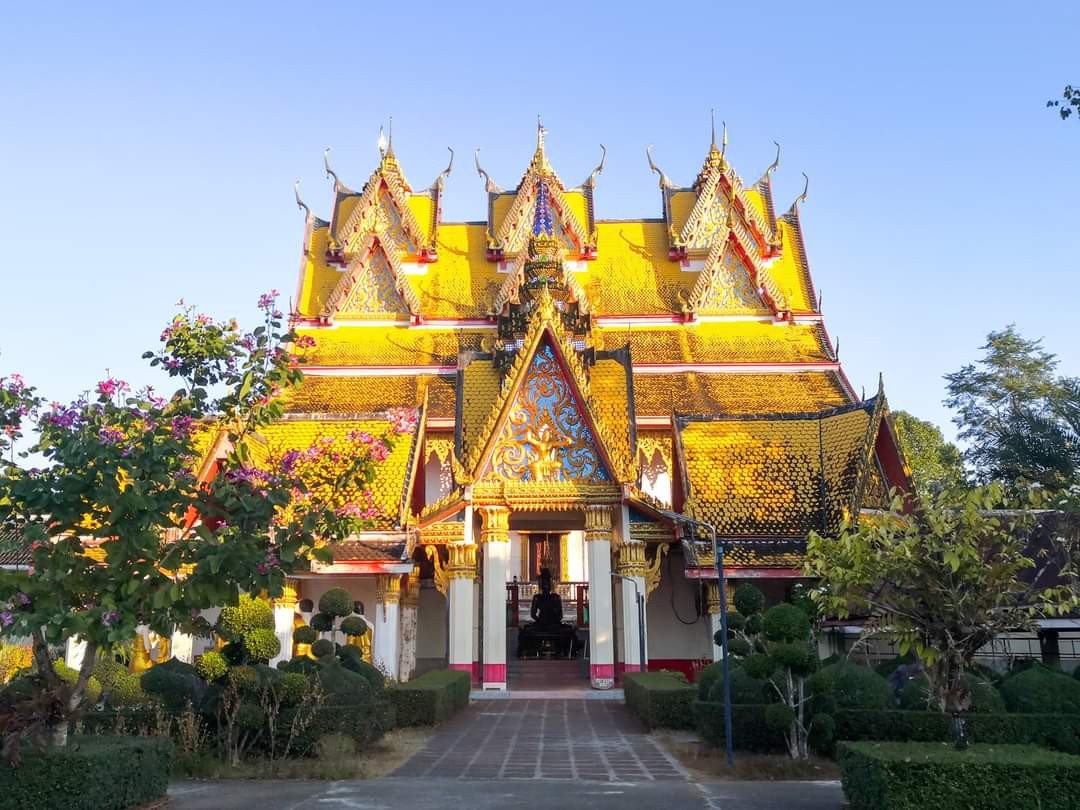
The temple was built by Phra Ratcha Udom Mongkhon, better known as Luang Pho Uttama, a famous and highly revered monk of Mon descent. He brought together the Karen, Mon and Thai people living in Sangkhlaburi to build the temple, so it was born out of their faith in him.
When the dam was built, the temple was moved up to high ground at a spot called Sam Prasop, where three rivers – the Songkalia, Bikhli and Ranti – meet, while the old temple remained underwater. Key sights at the new temple include the hall housing Luang Pho Uttama's remains, the marble Buddha image hall and the replica Bodh Gaya pagoda. It's truly stunning.
Bodh Gaya Pagoda
This beautiful golden pagoda stands out from far away. At the entrance, two Mon-style lions guard a long staircase leading up to the square-based pagoda, topped by a small round Mon-style stupa. Inside are relics of the Buddha that Luang Pho Uttama brought from Sri Lanka for people to pay respect to.
Three Pagodas Pass
About 20-plus kilometers from Sangkhlaburi town is this border checkpoint between Thailand and Myanmar. The highlight is the three white pagodas, believed to have been built in the late Ayutthaya period as a symbol of peace. There are lots of things for sale around the border, and you can also cross over to Payathonzu in Myanmar – and just between us, things there are really cheap.
Sangkhlaburi Walking Street
If you want to visit the walking street, we suggest coming on a Saturday; the regular market is open every day, right where the minivans drop you off. The food here is as good as anywhere – there's so much to eat. Our top pick is Burmese-style "moo jum" (pork skewers dipped in broth): some stalls sell them for just 1–2 baht a stick. Sit at the stall, help yourself, everyone gets their own dipping sauce, then count your sticks and pay when you're done. Everything else is delicious and cheap too – and we think the samosas here are seriously good.
Wat Huai Malai
Wat Huai Malai is in Ban Huai Malai, about 20 kilometers from Sangkhlaburi, right at the edge of the Thai border. The drive is gorgeous, especially when rain clouds roll in. Inside the temple is the "Suphannaphum Pagoda", designed by the former abbot Phra Athikan Santi Santakaro, which also enshrines relics of the Buddha. Next to the temple there's a Mon morning market with lots of tasty food.
So, what do you think of Sangkhlaburi? It's an easy weekend trip – highly recommended for nature lovers and anyone who enjoys simple, local-life travel on a budget. And if you want to continue on to Pilok after Sangkhlaburi, just turn right at the Thong Pha Phum junction.
FAQ
How do I get to Sangkhlaburi?
Take a minivan from Kanchanaburi town for 175 baht (about 3–4 hours), or drive yourself, taking care on the winding mountain road.
When can you walk into the sunken temple in Sangkhlaburi?
Between March and May, when the water level drops, visitors can walk inside the old temple.
What is the Mon Bridge?
The Uttamanusorn Bridge is a wooden bridge over the Songkalia River to the Mon village, considered the longest wooden bridge in Thailand.
When is the Sangkhlaburi walking street?
Come on a Saturday for the walking street; the regular market is open daily where the minivans stop.
The Meeting Point management team loves eating, travelling, temple visits and lifestyle. We pick the restaurants, cafes, stays, attractions and temples we have visited ourselves and write about them honestly.