Erawan Shrine at Ratchaprasong: Paying Respects to Brahma in Central Bangkok
The Erawan Shrine (San Thao Maha Phrom) at Ratchaprasong is Thailand's most famous Brahma shrine, easy to reach in central Bangkok. Here's the story of Brahma before you go.
 Meeting Point Management Team
Published · Updated
2 min read
2,664 views
Quick answer
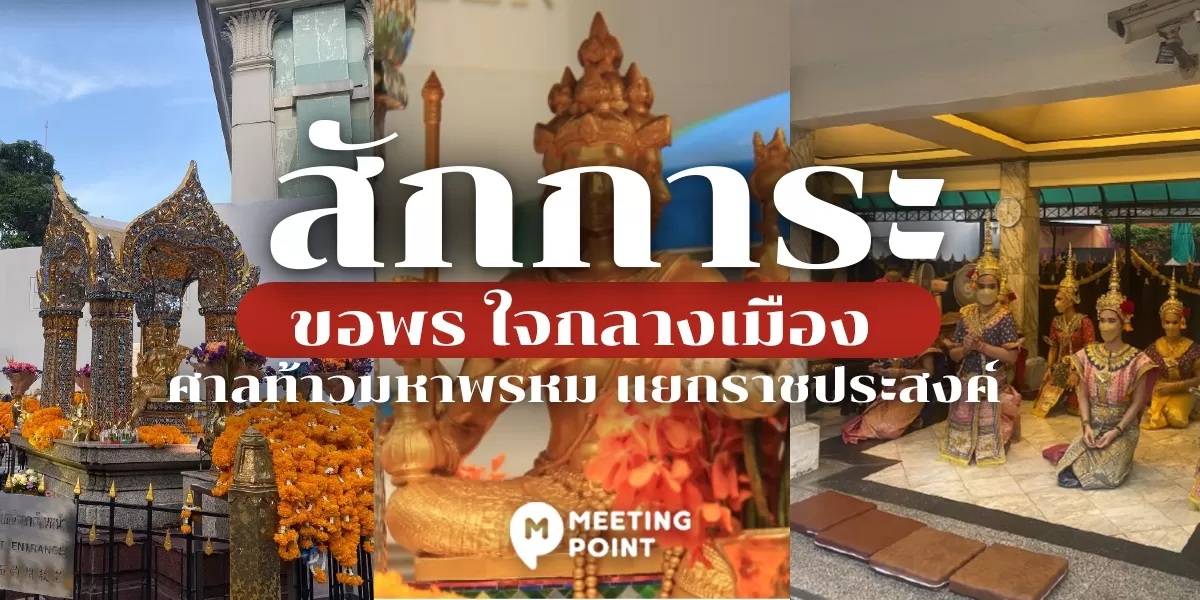
The Erawan Shrine is in front of the Grand Hyatt Erawan hotel at Ratchaprasong Intersection, Ratchadamri Road, Pathum Wan, Bangkok. It's Thailand's most famous Brahma shrine. In Hinduism, Brahma is the creator of the world, depicted with four faces and four arms. Open 6:00-22:00.
Key takeaways
- Thailand's most famous Brahma shrine, at Ratchaprasong Intersection
- Brahma is one of Hinduism's three supreme gods, the creator of the world and all life
- Red body, four faces and four arms holding prayer beads, a lotus, scripture and a water pot; his mount is the swan (hamsa)
- Several legends explain the four faces, including the Matsya Purana and Padma Purana
- Open 6:00-22:00
If you're into spiritual pilgrimages (sai mu in Thai) or have something weighing on your mind, finding spiritual comfort is a good option. Today Meeting Point is taking everyone to pay respects and make a wish right in the city center at the Erawan Shrine (San Thao Maha Phrom) at Ratchaprasong Intersection. It's easy to get to. Ready? Let's go!

Today Meeting Point is happy to take you to pay your respects. Brahma (Phra Phrom) is one of the three supreme gods in Hinduism and is regarded as the creator of the world and all living things. There are various stories about Brahma's birth. Some say he is Svayambhu, self-born. Some say he was born from a golden egg, according to the Mahabharata and some Puranas. Other versions say Brahma was born from a lotus that sprang from the navel of Vishnu (Phra Narai) as he reclined on the serpent Ananta in the Ocean of Milk.
Brahma has a red body, four faces and four arms, holding prayer beads, a lotus, a scripture and a water pot (some texts describe 8 arms), and his mount is the swan (hamsa).

Why does Brahma have four faces?
According to the legend in the Matsya Purana, when Brahma created Shatarupa, he became deeply infatuated with her beauty. When she moved to his right, he wanted to keep watching her, and a second face appeared. As she moved to the left, behind him and above him, more faces appeared, until he had five.
However, the fifth face was destroyed. Because Brahma spoke insultingly of Shiva, one of his faces was burned by Shiva's third eye, leaving only four.
The Padma Purana tells a different story. Brahma's fifth face shone with immense radiance and was the face that held the Vedas. The gods (suras) and the non-gods (asuras) could not bear it, so they went to ask Shiva for help.
Shiva saw that the fifth face shone brighter than a thousand suns and would bring suffering to the world, so he cut it off with his fingernail.

Brahma in Thai beliefs
In the lands that are now Thailand, belief in Brahma dates back at least to the Sukhothai period (it appears in the Traiphum Phra Ruang). Ideas about Brahma were adapted to fit local spirit beliefs and Buddhism, blending together and passing related beliefs down to the present day.
This led to the establishment of what is arguably the most famous Brahma shrine in Thailand: the Brahma shrine of the Erawan Hotel at Ratchaprasong Intersection, Bangkok, right here.
Erawan Shrine (San Thao Maha Phrom)
- Location: In front of the Grand Hyatt Erawan hotel, Ratchaprasong Intersection, Ratchadamri Road, Lumphini, Pathum Wan, Bangkok
- Map: https://goo.gl/maps/i4zytVcBwkfU6vD16
- Hours: 6:00-22:00
FAQ
Where is the Erawan Shrine?
It's in front of the Grand Hyatt Erawan hotel at Ratchaprasong Intersection, Ratchadamri Road, Lumphini, Pathum Wan, Bangkok.
What are the Erawan Shrine's opening hours?
6:00-22:00.
Who is worshipped at the Erawan Shrine?
Brahma (Phra Phrom), the Hindu creator god, shown with four faces and four arms. Thais pray here for all kinds of wishes.
Why does Brahma have four faces?
One legend from the Matsya Purana says he grew a new face each way Shatarupa moved, ending with five, and Shiva destroyed the fifth. The Padma Purana says Shiva cut off the fifth face because its radiance was too intense.
The Meeting Point management team loves eating, travelling, temple visits and lifestyle. We pick the restaurants, cafes, stays, attractions and temples we have visited ourselves and write about them honestly.